A couch is one of the most used pieces of furniture in any home. It's where people unwind after a long day, where kids pile up for movie night, and where the dog has claimed his permanent spot. Over time, all that daily contact adds up. Even if your couch looks fine on the surface, it can slowly develop odors that are hard to ignore.
Sometimes the smell is mild at first. You catch it when you sit down or when the room's been closed up for a while. That's usually when people start thinking about upholstery cleaning.
In homes around Spring, Texas, this happens more often than people expect. Warm weather, humidity, and everyday activity all contribute to how quickly odors build up in fabric. What makes it frustrating is that even after cleaning, the smell can come back if the source wasn't fully removed.
Why couch odors develop
It doesn't happen overnight. Odors build up gradually as different materials settle into the fabric and cushions.
Think about everything that touches your furniture. Clothing, skin oils, food, pet hair, sweat. Over time, these elements sink into the fibers and collect deeper inside the cushioning. Unlike hard surfaces, upholstery absorbs what it contacts. Once that buildup reaches deeper layers, surface cleaning isn't enough.
The usual suspects
Most couch odors come from completely normal, everyday use:
- Body oils and sweat from skin contact
- Food crumbs and spills that weren't fully cleaned
- Dust and airborne particles settling into the fabric
- Pet hair, dander, and oils
Each of these seems minor on its own. Combined over months, they create a noticeable smell that gets worse in warm, enclosed rooms.
Pets are the biggest factor
Pets are often the main reason couch odors become impossible to ignore. Even well-trained pets leave behind hair, dander, and natural oils that settle into the fabric. Small accidents or damp paws push the problem deeper.
Pet odor doesn't just sit on the surface. It migrates into the padding where it's nearly impossible to reach with home cleaning products. Pet urine is especially persistent because the uric acid crystals that form as it dries get reactivated by humidity.
In Spring, Texas, where humidity stays elevated for months at a time, pet odor on furniture is practically a year-round problem.
Humidity makes everything worse
Moisture is one of the biggest triggers for upholstery odor. Even small amounts can activate odor-causing compounds already present in the fabric. Spills that weren't fully dried, humidity in the air, and cleaning methods that leave moisture behind all contribute.
Here in Spring, Texas, the humidity factor can't be overstated. When the air itself carries moisture, it constantly reactivates whatever's living in your couch cushions. A sofa that smells fine in January can start smelling musty the moment the warm season kicks in.
Why the smell comes back after cleaning
This is one of the most common frustrations. You clean the couch, it smells better for a few days, then the odor returns.
This usually happens because the cleaning didn't reach deep enough. Moisture from the cleaning attempt can actually reactivate what's still inside the cushion. The cleaning didn't fail. It just didn't go far enough to remove the source.
Also worth knowing: some cleaning products leave a residue that attracts new dirt and oils. That residue can create its own musty smell over time as it traps organic matter against the fabric.
How to remove couch odors the right way
If your couch has developed a smell, taking the right approach matters:
Step 1: Vacuum thoroughly. Remove surface debris, crumbs, and pet hair. Get into the crevices.
Step 2: Identify the worst areas. Focus on where the smell is strongest. That helps target the source.
Step 3: Use minimal moisture. Avoid soaking the fabric. Too much water makes the problem worse.
Step 4: Use a proper odor solution. A pet odor eliminator or enzyme-based cleaner breaks down the compounds causing the smell.
Step 5: Let it fully dry. Good airflow is key. Open windows or use a fan.
Step 6: Call a professional if the odor remains. If home methods aren't working, the issue is deeper than the surface.
When to call a professional
Some odors go beyond what home cleaning can handle. You probably need professional upholstery cleaning if the smell keeps returning, the odor is strong or widespread, there are pet-related issues in the cushions, or multiple DIY attempts haven't made a lasting difference.
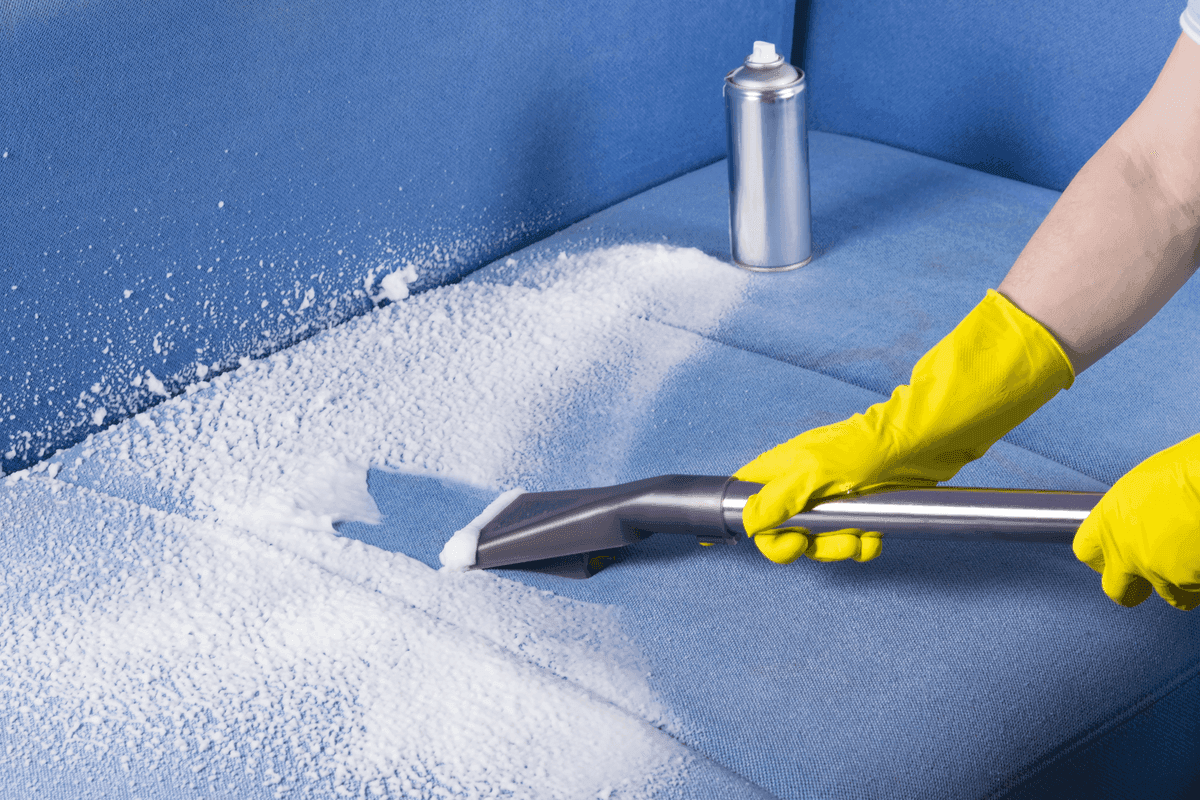
Professional cleaning uses equipment designed to extract buildup from inside the cushioning, not just the fabric surface. That deeper access is what makes the difference between temporary improvement and lasting results.
Furniture and carpet work together
Odors move between surfaces. If your couch smells, there's a good chance the carpet underneath it does too. Pet odor in particular travels between furniture and flooring. Cleaning one surface while ignoring the other usually means the smell comes back.
That's why a lot of our Spring, Texas customers schedule upholstery and carpet cleaning in the same visit. Addressing both at once gives you a better overall result.
Keep your couch fresh going forward
Once your couch is clean, a few habits help keep it that way:
- Vacuum the cushions regularly
- Clean spills right away by blotting
- Avoid heavy use of cleaning sprays (they leave residue)
- Keep pets groomed to reduce hair and dander
- Maintain good airflow in your home
If your couch has developed an odor that won't go away, stop fighting it with store products and give us a call at 281-825-3161 or schedule online. We'll get to the source of the smell and take care of it properly. Your couch should be something you enjoy sitting on, not something you avoid.